V. K. Sharma, Senior Consultant logo Veekay ConsultantVirender Kumar Sharma

Thirty-five years inside India's banks. Now working on your side of the counter.

Practical consultancy on banking disputes, loan recovery, banking law and property matters from a retired Deputy General Manager of Indian Overseas Bank.

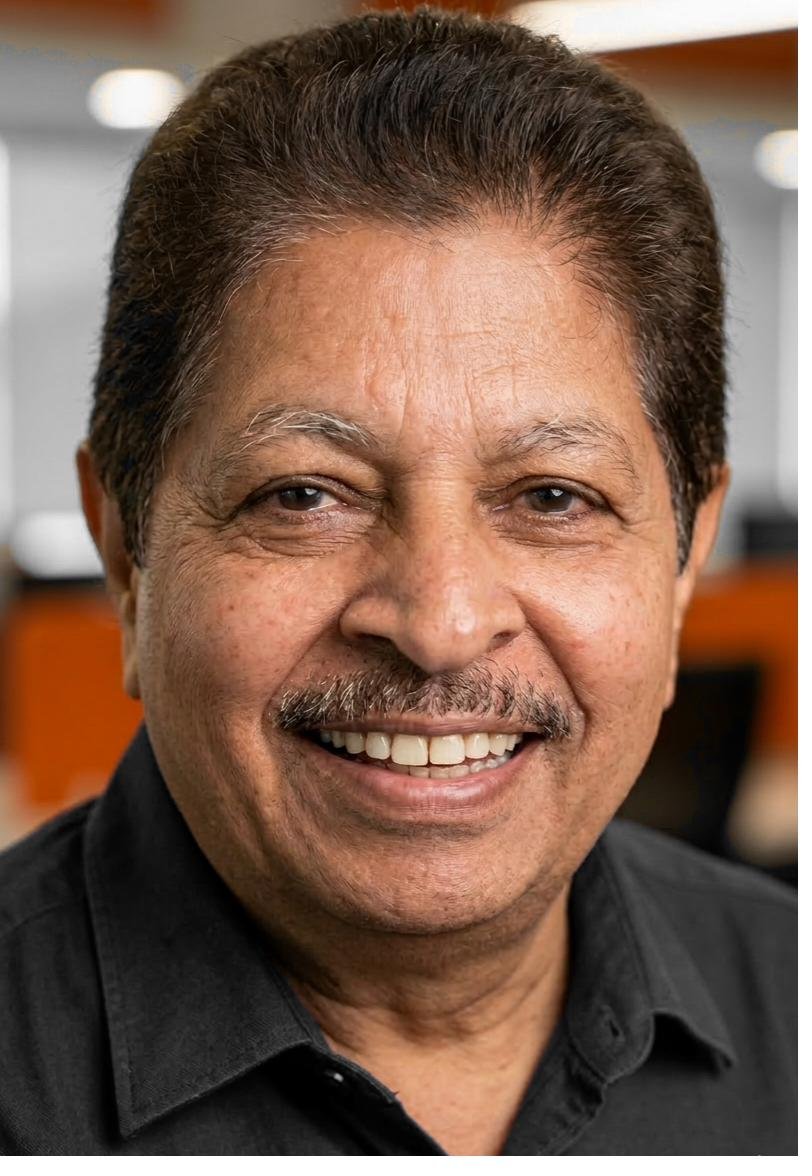
Portrait of Virender Kumar Sharma
Virender Kumar SharmaRetired DGM, Indian Overseas Bank

35 Years of Banking Experience. A Lifetime of Practical Insight.

With 35 years of distinguished experience with Indian Overseas Bank, I have worked across branches, regional and central offices in different parts of India, ultimately retiring as Deputy General Manager.

Over the course of my banking career, I have been closely involved in credit appraisal and sanctioning, loan documentation, recovery, NPAs, banking operations and resolution of complex financial matters. This experience has given me a practical understanding of how banks assess risk, take decisions and, ultimately, how documentation and legal processes can determine the outcome of a financial matter.

My professional journey also gave me a valuable perspective from the other side of the table. After retiring from banking, I served for two years as Chief Financial Officer of the S M Group of Companies, a manufacturing group engaged in the production of cooking gas cylinders. In that role, I was responsible for financial management, working capital, banking facilities, lender relationships and corporate financial matters. This experience enabled me to understand the challenges faced by borrowers and businesses from within the organisation itself.

Where Banking Meets Law, Finance and Practical Solutions

Today, I bring together these two perspectives—the banker’s understanding of credit and risk and the borrower’s understanding of business and financial realities—to help individuals, borrowers, account holders and businesses better understand their position when dealing with banks and financial institutions.

My approach is practical and straightforward: understand the facts, examine the documents, identify the applicable rules and law, and then evaluate the realistic options available.

I believe that people dealing with banks should not have to depend solely on technical terminology or assumptions. They deserve to understand what their documents mean, what a bank can and cannot do, what remedies may be available, and what course of action is commercially and legally sensible.

A Scientist’s Approach to Problem Solving

My academic background is in Physics, with an M.Sc. from the University of Delhi. The analytical discipline developed through science has remained an integral part of my approach to professional matters—observe the facts, analyse the evidence, understand the underlying principles and arrive at a reasoned conclusion.

I also continue to enjoy helping students understand Physics and scientific concepts in a simple and logical manner.

My objective is simple: to make Banking, Finance and related legal matters easier to understand, more transparent and more actionable for the people who have to deal with them.

  • Experience35 years in banking, pan-India
  • BankingDeputy General Manager, Indian Overseas Bank
  • IndustryChief Financial Officer for 2 years, S M Group of Companies (manufacturers of cooking gas cylinders)
  • EducationM.Sc. Physics, University of Delhi
  • PracticeFinancial and corporate law consultant
  • FocusBanking, banking law and property matters
  • LanguagesEnglish and Hindi

Areas of consultancy

Bring the notice, the loan papers or the property documents. I'll explain what they mean and how to respond.

Banking matters

Day-to-day disputes and decisions with your bank.

  • Loan restructuring and one-time settlement (OTS) proposals
  • NPA classification and its consequences
  • Wrong charges, disputed debits and account freezes
  • Complaints under the RBI Integrated Ombudsman Scheme
  • Credit facilities, sanctions and documentation review

Banking law

Understanding recovery action and your rights under it.

  • SARFAESI Act, 2002: notices under Sections 13(2) and 13(4), and the Section 17 remedy
  • Recovery proceedings before Debts Recovery Tribunals (RDB Act, 1993)
  • Cheque dishonour under Section 138, Negotiable Instruments Act, 1881
  • Guarantor liability and bankers' rights
  • Documentation and compliance questions

Property matters

Property questions where banks, titles or families meet.

  • Title and chain-of-documents review before purchase or mortgage
  • Mortgaged and bank-auctioned property questions
  • Ancestral and family property disputes
  • Sale deeds, registration and encumbrance checks
  • Preparing your papers before you meet an advocate

I work as a consultant, not as an advocate. Where a matter needs filing or representation before a court or tribunal, I can help you organise the case and work alongside the advocate you engage.

How a consultation works

Everything starts by email, so you can share documents at your own pace.

  1. Write to me

    Describe the matter briefly and mention any deadline on a notice.

  2. Share documents

    Send scans or clear photos of the notices, loan papers or deeds.

  3. Fee and review

    I confirm the fee for your matter, then study the papers.

  4. Get clear advice

    You receive my assessment and a practical plan of next steps.

Physics help and my YouTube channel

Alongside banking, I clear basic physics questions. Students and parents can email a doubt, and my channel explains physics and practical banking in simple language.

Ask a physics question

Stuck on a concept or a numerical? Send the question, your class and, if possible, a photo of the problem. I explain the idea step by step rather than just giving the answer.

  • Mechanics: motion, force, work and energy
  • Electricity and magnetism
  • Light, optics and sound
  • Basics of modern physics
  • Suited to school students, especially up to Class 10
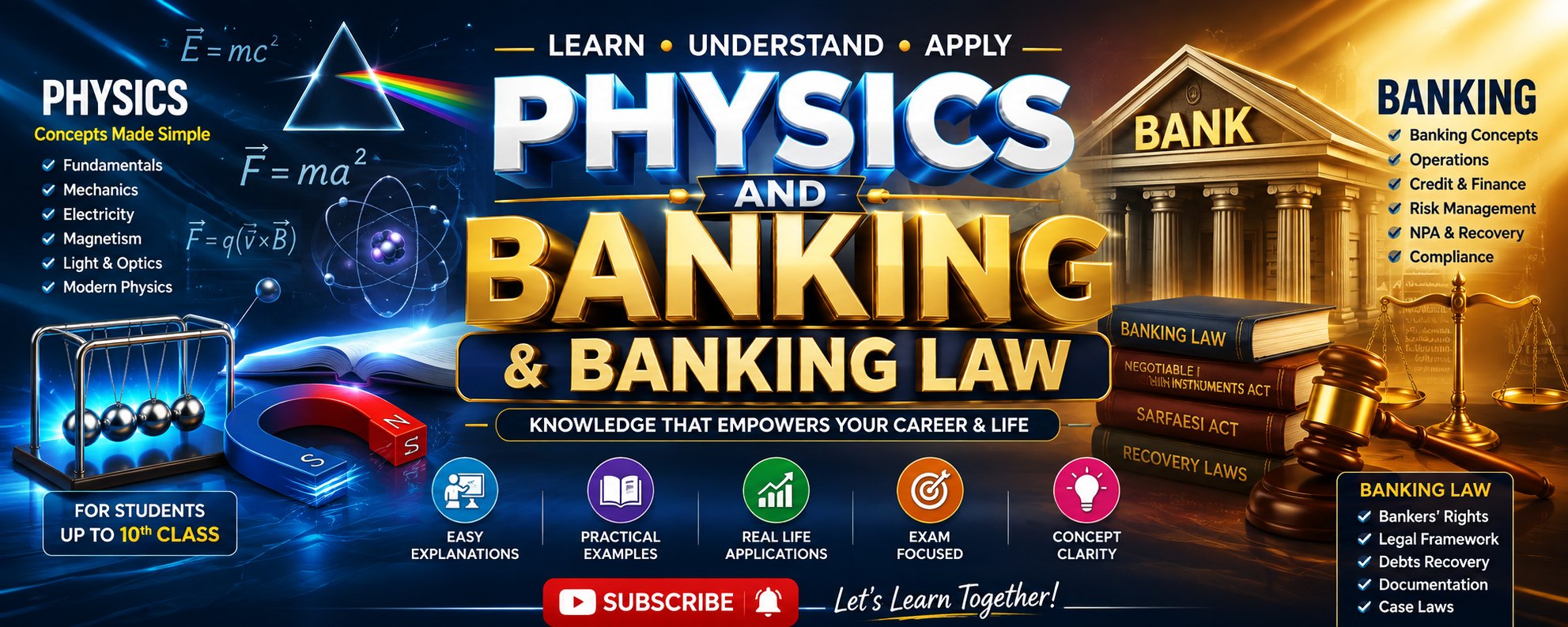
Channel banner: Physics and Banking and Banking Law
  • Your banking rights and how to complain to the RBI Ombudsman
  • SARFAESI, recovery laws and the Negotiable Instruments Act explained simply
  • Physics concepts for students up to Class 10

Channel link coming soon.

Common questions

Short answers to questions I hear often. Every matter turns on its own documents, so please treat these as a starting point.

I have received a notice under Section 13(2) of the SARFAESI Act. How much time do I have?

The notice gives you 60 days from its date to pay the amount demanded. Within that period you can send the bank a written representation or objection. Under Section 13(3A), the bank must reply with its reasons within 15 days if it does not accept your objection.

If the bank later takes possession or other measures under Section 13(4), an application to the Debts Recovery Tribunal under Section 17 must be filed within 45 days. Do not let these dates pass while you wait.

When can I go to the RBI Ombudsman with a complaint against my bank?

First complain to the bank in writing. You may approach the RBI Ombudsman if the bank rejects your complaint, gives a reply you are not satisfied with, or does not reply within 30 days. The complaint can be filed online at cms.rbi.org.in, generally within one year of the bank's reply.

The RBI revises the Ombudsman scheme from time to time. Check the current scheme on the RBI website before filing, as time limits and exclusions can change.

A cheque given to me has bounced. What should I do?

Under Section 138 of the Negotiable Instruments Act, 1881, send a written legal demand notice to the drawer within 30 days of receiving the bank's return memo. The drawer then has 15 days to pay. If payment is not made, a complaint must be filed before the magistrate within one month after those 15 days end.

The cheque must have been presented within its validity period, which is currently three months from its date.

Can a one-time settlement (OTS) still be negotiated after the account becomes an NPA?

Yes. Banks routinely consider OTS proposals for NPA accounts, including during recovery proceedings. What the bank will accept depends on its own board-approved settlement policy, the value of the security and your repayment capacity. A well-prepared proposal with realistic figures has a far better chance.

Can you appear for me in court or at the Debts Recovery Tribunal?

No. I am a consultant and not an advocate, so I do not appear before courts or tribunals. I help you understand the matter, review documents, prepare your case material and work alongside the advocate you engage.

Contact me

Email or call me. I reply to every email enquiry, usually within two working days.

viren7569@gmail.com

Call or message: +91 98710 45761

Connect with me on LinkedIn

Fees depend on the nature of the matter and are confirmed by email before any work begins.

Helpful to include in your email

  • Your name and city
  • Name of the bank or other party
  • What happened, in a few lines
  • Dates of any notice received
  • Copies of the key documents